A fire can start anywhere — a kitchen in Kathmandu, a hotel in Pokhara, a garment factory in Bhaktapur, or a warehouse in Hetauda. When it does, the fire hose is often the first tool used to fight it. But not every fire hose is the same.
Many building owners in Nepal buy a fire hose just to pass an inspection. They don't think about whether it is the right type for their building. This is a mistake that can cost lives and property.
In this guide, You will learn what each hose is made of, where it is used, and how to pick the right one for your home, office, hotel, hospital, school, or factory.
Table of Contents
What Is a Fire Hose?
A fire hose is a flexible pipe that carries water (or foam) from a water source to the fire. The water source can be a fire hydrant, a water tank, a fire pump, or a river.
The hose connects to a nozzle at one end. The nozzle controls how the water comes out — as a straight jet or a spray. Firefighters, building staff, or trained volunteers hold the nozzle and direct water onto the fire.
Choosing the wrong hose type can create serious problems. A hose that is too weak may burst under pressure. A hose that is too heavy may be hard for one person to carry and use. A hose that does not match your hydrant system may simply not fit.
This is why understanding fire hose types is not just technical knowledge — it is basic safety planning for any building.
Main Types of Fire Hoses
Fire hoses are usually grouped by their use, size, and how they are built. Let's go through each type one by one.
1. Attack Hose
An attack hose is the hose firefighters use to attack the fire directly. It is the hose you see connected to a nozzle, ready to spray water straight onto the flames. This is usually the hose people picture when they think of "fighting a fire."
Key features:
Diameter is usually 38mm to 65mm (1.5 to 2.5 inches) — small enough to carry, big enough to deliver a strong jet of water
Made from rubber-lined synthetic fabric or PVC-lined polyester, which handles high pressure without bursting
Light enough for one or two people to carry, so it can be moved quickly around corners, through doorways, and up stairs
Built for short bursts of fast action rather than long-distance water delivery, which means it needs a strong water supply — from a pump, tank, or hydrant — feeding it from behind
Common in fire brigades, factories with in-house fire teams, and large commercial buildings that have trained fire wardens on staff, since using it well takes some practice and physical effort
2. Supply Hose (Large Diameter Hose)
A supply hose does not spray water on fire directly. Its whole job is to move large amounts of water from a hydrant, water tanker, or storage tank to a fire engine or fire pump, so that the attack hose always has enough water behind it.
Key features:
Wider diameter, usually 65mm to 150mm (2.5 to 6 inches), which allows it to move a much bigger volume of water than an attack hose
Made from rubber-lined or synthetic lay-flat fabric; larger sizes are sometimes semi-rigid for strength
Heavy and bulky, often needing two or more people, or a hose-laying vehicle, to move and lay it out properly
Not practical for spraying directly on a fire, but essential when a fire needs a strong, continuous water supply that lasts long enough to bring the blaze under control
Commonly found in fire departments, industrial complexes, and large facilities with their own fire pump systems, such as factories in Nepal's industrial areas, where a single hydrant connection isn't enough on its own
3. Booster Hose
A booster hose is a small, tough hose that is usually kept coiled on a reel on a fire truck or a small fire pump trolley. It is meant for quick action on small fires — things like a grass fire, a vehicle fire, or a minor spark before it grows into something bigger.
Key features:
Small diameter, usually 19mm to 25mm (0.75 to 1 inch), which limits how much water it can deliver
Rigid rubber construction, so it holds its round shape and doesn't flatten out even when there's no pressure inside
Almost always permanently mounted on a reel, ready to unroll and use within seconds
Best suited for fast, early response rather than a large or spreading fire, since its water flow is limited compared to attack or supply hoses
Commonly used on fire trucks, in small industrial units, and on quick-response fire trolleys kept for minor incidents
4. Suction Hose
A suction hose works differently from the other types. Instead of pushing water forward, it pulls — or "sucks" — water from a source like a river, pond, tank, or well into a fire pump, which then sends that water out through attack or supply hoses.
Key features:
Rigid, reinforced structure, often with a wire coil built into the hose wall, so it doesn't collapse when the pump creates suction
Larger diameter, typically 100mm to 150mm, to draw enough water fast
Heavier and less flexible than other hose types, and it needs a strainer fitted at the intake end to stop leaves, mud, and debris from getting into the pump
Extremely useful in areas without reliable hydrant access, letting fire teams draw water from a nearby pond, river, or storage tank instead
Common in rural fire response, farms, and buildings — including many outside Kathmandu Valley — that rely on water tanks or natural sources rather than city hydrants
5. Hose Reel Hose
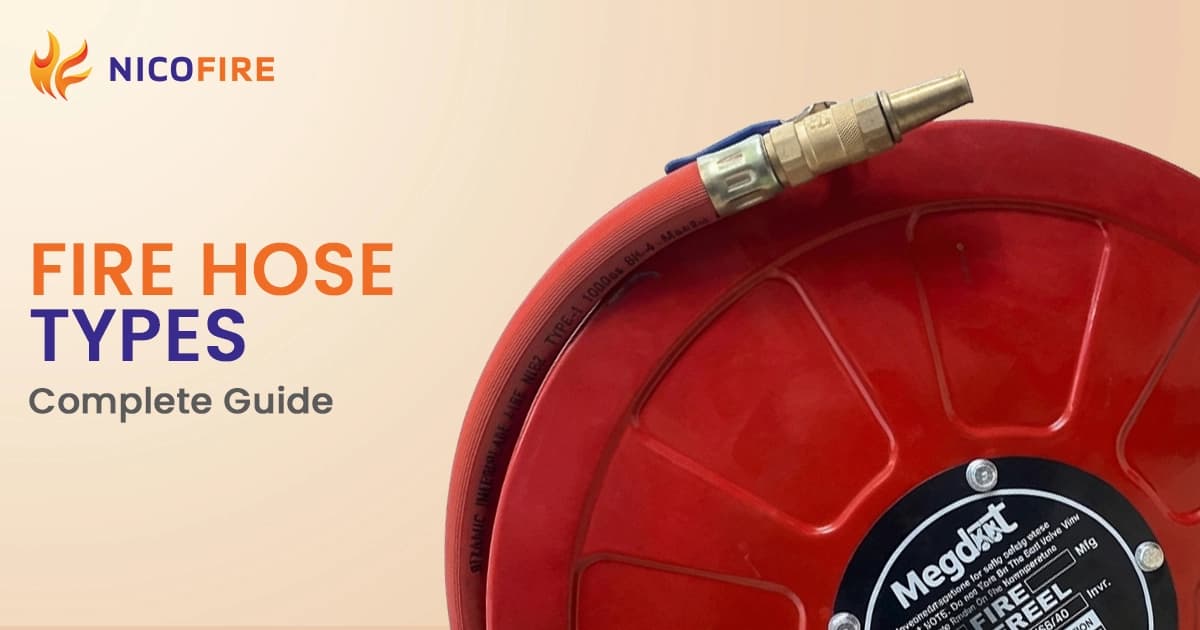
This is the hose most people actually see inside buildings — mounted on a wall or wheel, usually near a staircase, corridor, or lobby, and always ready to use without any setup.
Key features:
Small diameter, typically 19mm to 25mm, made for easy handling by one person
Semi-rigid rubber construction, so the hose stays open and ready even when there's no water flowing through it
Always connected to the water supply, so there's no time lost attaching couplings during an emergency — just pull the hose out, turn the valve, and spray
Very easy for untrained people to use, which makes it the right choice for buildings where staff are not professional firefighters, such as hotels, hospitals, schools, and offices
Only meant for small, early-stage fires; it does not have the pressure or flow to handle a large or fast-spreading fire, so it should be backed up by fire extinguishers, hydrants, or professional response for bigger incidents
Found in almost every commercial building in Nepal that follows fire safety codes, from hotels in Thamel to hospitals and shopping complexes, as a standard part of building fire protection
Fire Hose Comparison Table
Hose Type | Typical Diameter | Main Use | Who Uses It | Best For |
Attack Hose | 38–65mm | Direct firefighting | Trained fire teams | Factories, large commercial buildings |
Supply Hose | 65–150mm | Moving large water volumes | Fire departments | Industrial sites, big complexes |
Booster Hose | 19–25mm | Small fires | Fire trucks, response trolleys | Vehicle fires, grass fires |
Suction Hose | 100–150mm | Drawing water from a source | Fire teams, rural units | Areas without hydrants |
Hose Reel Hose | 19–25mm | Early-stage fire control | Building staff, general public | Hotels, hospitals, schools, offices |
Fire Hose Materials
The material a hose is made from affects how strong, light, and long-lasting it is. Here are the common ones:
Rubber-lined hose: Has a rubber layer inside a fabric cover. Strong, durable, and resists damage from heat and rough handling. Common for attack and supply hoses.
Synthetic (PVC or polyester) hose: Lighter than rubber, resists mildew and rot, and is easier to clean. Popular for hose reels and general building use because Nepal's humid seasons can damage weaker materials.
Canvas or cotton hose (older type): Made from woven cotton, sometimes lined with rubber. These are cheaper but wear out faster, especially with Nepal's monsoon dampness. Many older buildings still have these, but they should be checked more often and replaced sooner.
If your building still uses old canvas hoses, it's worth asking a fire safety technician to inspect them closely. Cotton fibres can rot from the inside, and this is hard to see just by looking.
How to Choose the Right Fire Hose for Your Building
Choosing the right fire hose is just as important as installing one. The best choice depends on your building, water supply, and fire risks. Here are the key factors you should consider before buying a fire hose.
1. Type of Building and Fire Risk
A hospital or school needs hose reel hoses that untrained staff can use safely. A garment factory or warehouse with flammable materials needs stronger attack and supply hoses, plus trained staff.
Also Read: Importance of fire hydrant system in buildings
2. Water Pressure Available
Check your building's water pressure before buying a hose. A hose rated for high pressure is wasted if your pump or hydrant cannot supply that pressure. Ask your fire safety contractor to test this.
3. Hydrant and Coupling Compatibility
Fire hoses connect using couplings (the metal fittings at each end). If your hose coupling does not match your hydrant valve or fire pump outlet, the hose is useless in an emergency. Always match the coupling type used by your local fire department or building system.
4. Building Height and Layout
Taller buildings need hoses that can handle higher pressure to reach upper floors. Buildings with long corridors need reel hoses with enough length to cover the full floor area.
Quick Selection Guide by Building Type
Building Type | Recommended Hose | Why |
Home | Small hose reel or portable extinguisher-based system | Easy to use, low fire load |
Hotel | Hose reel on every floor | Guests and staff can act fast |
Hospital | Hose reel, clearly marked and accessible | Non-technical staff must be able to use it |
School | Hose reel, plus staff training | Quick response by teachers/staff |
Factory | Attack hose + supply hose, trained fire team | Higher fire risk, bigger fires possible |
Warehouse | Attack hose + supply hose, sometimes suction hose | Large open area, may lack close hydrant access |
Industrial facility | Full range: attack, supply, suction | Complex fire risks, need flexibility |
Storage, Inspection, and Maintenance
A fire hose is only useful if it works when you need it. Many hoses fail during an actual fire simply because they were not maintained.
Storage tips:
Keep hoses dry before storing; damp hoses grow mildew
Store in a cool, shaded place, away from direct sunlight and chemicals
Coil hoses loosely, not too tight, to avoid stress on the fabric
Inspection checklist (do this every 3–6 months):
Check for cracks, cuts, or worn patches on the hose surface
Check couplings for rust or damage
Check that the hose reel or drum turns smoothly
Look for any leaks when water is run through briefly
Confirm the nozzle opens and closes properly
Testing: Fire hoses should be pressure-tested once a year by a qualified technician. This checks whether the hose can still handle the pressure it's rated for, and it helps catch weak spots before they become dangerous.
Cleaning: After any use, wash the hose with clean water to remove dirt, oil, or chemicals. Let it dry fully before rolling it back onto the reel or storing it.
Common Mistakes to Avoid
Many buildings in Nepal make the same few mistakes with fire hoses. Here's what to watch out for:
Buying the wrong diameter: A hose too small won't deliver enough water; too large may be hard for staff to control.
Ignoring coupling compatibility: A hose that doesn't fit the hydrant is as good as not having one.
Skipping annual testing: A hose can look fine but still fail under real pressure.
Storing hoses wet: This causes mildew and weakens the material over time, especially in Nepal's humid climate.
No staff training: Even the best hose reel is useless if nobody in the building knows how to operate it.
Forgetting related equipment: A hose alone doesn't work without a functioning hydrant valve, nozzle, and water pressure from a pump. Check the whole system together, not just the hose.
Conclusion
Fire hoses are not the same, and every building has different fire safety needs. A hotel may need a different type of fire hose than a factory, while a school may require something different from a warehouse. Understanding the basic types of fire hoses, including attack, supply, booster, suction, and hose reel hoses, helps you choose the right one for your building.
If you are unsure which fire hose is best for your property, it is a good idea to consult a fire safety professional in Nepal. Investing in the right fire hose today can make a big difference when responding to a fire emergency.
If you're looking for a fire hose or a complete fire hydrant system, contact Nicofire for certified fire safety products.
Frequently Asked Questions
A fire hose is a flexible pipe that carries water from a source to a fire. It helps control water flow so firefighters or trained users can reach the flames safely and put out fires quickly, protecting people and property.
The two main types are attack hoses and supply hoses. Attack hoses are smaller and used to spray water directly on fires, ideal for homes, offices, and indoor areas. Supply hoses are larger, carrying high volumes of water from hydrants or tanks to pumps, suitable for factories, warehouses, and large buildings.
Fire hoses are used in homes, schools, offices, factories, and outdoor areas like forests or villages. The type of hose depends on the fire size, location, and available water source, ensuring water reaches the fire effectively.
Choosing the right fire hose depends on fire risk and location. Attack hoses are best for indoor fires, supply hoses for large or industrial fires, wildland hoses for forests and hills, and hard suction hoses where hydrants aren’t available. Using the correct hose improves fire control and safety.
Fire hoses should be checked regularly for damage, leaks, or weak spots. Pressure tests, cleaning, drying, and safe storage are essential. Proper maintenance ensures the hose works well during emergencies and lasts longer.
Nozzles control the water spray pattern, while valves regulate flow and pressure. Together, they help aim water accurately, control fire safely, and prevent water waste, making firefighting more effective.
Comments
No comments yet.
Be the first to share your thoughts.