

When a fire gets bigger, a fire extinguisher may not be enough. A fire hydrant system provides a strong water supply to help control the fire and reduce damage. For this reason, it is important to choose the right system, keep good water pressure, and check it from time to time.
Fire can destroy a building in minutes. A good fire hydrant system can stop that from happening. But many people in Nepal buy a fire hydrant system without knowing what to check first, and end up with equipment that does not fit their building.
This guide will help you understand what a fire hydrant system is, what to look for before buying one, and how to avoid common mistakes. Whether you own a home, run a shop, manage an apartment building, or are building a factory, this blog will help you make a smart, safe decision.
Table of Contents
What Is a Fire Hydrant System?
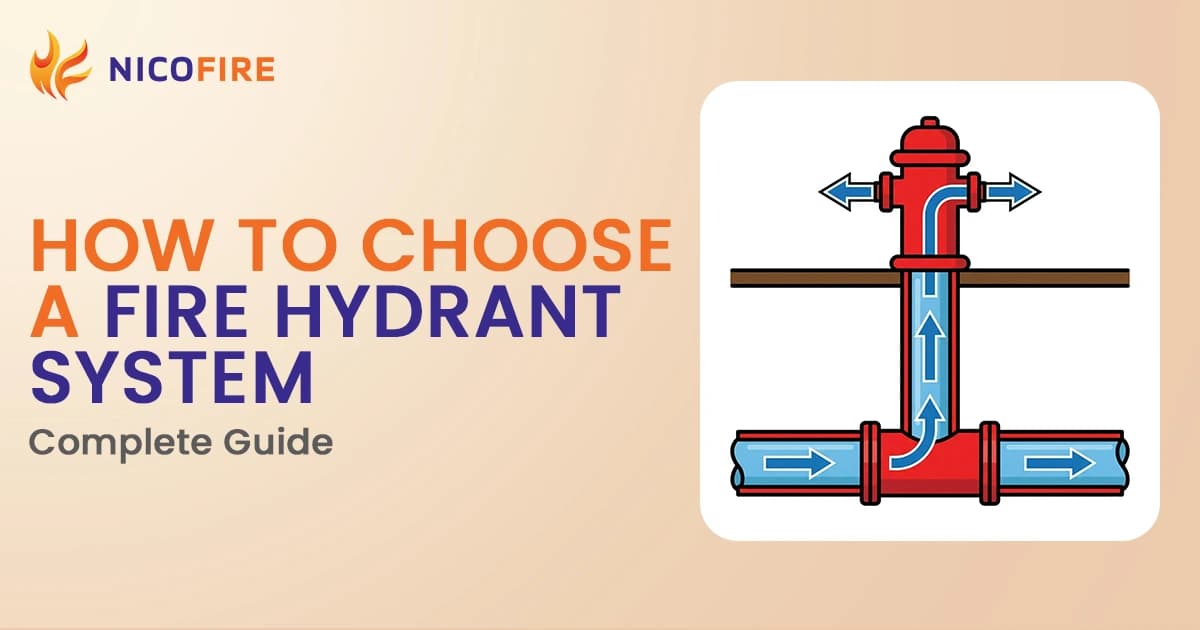
A fire hydrant system is a network of pipes, pumps, valves, and hoses that supplies water to fight a fire inside or around a building. When there is a fire, someone can open a hydrant valve, connect a hose, and spray water directly on the flames.
Think of it like a mini fire station built into your building. Instead of waiting for a fire truck, people on site can start fighting the fire right away. This can save lives and reduce property damage before the fire brigade even arrives.
A basic system usually includes a water tank, a set of pumps, pipelines running through the building, hydrant valves at different points, and hoses connected to those valves. Some systems also include hose reels, which are lighter and easier to use for small fires.
Why Choosing the Right System Matters
Not every building needs the same kind of fire hydrant system. A small house does not need the same fire hydrant system as a large apartment building or a factory. Choosing the wrong system can reduce your building's fire protection, even if you spend a lot of money on it.
If the system is too small, it may not supply enough water pressure to reach the top floors during a fire. If it is poorly installed, it may fail exactly when you need it most. And if you buy poor-quality parts, they may rust, leak, or stop working after just a year or two.
On the other hand, a well-planned system gives you peace of mind. It protects your family, your tenants, your employees, and your investment. This is why it is worth spending time to understand your options before buying.
Key Factors to Consider Before Buying
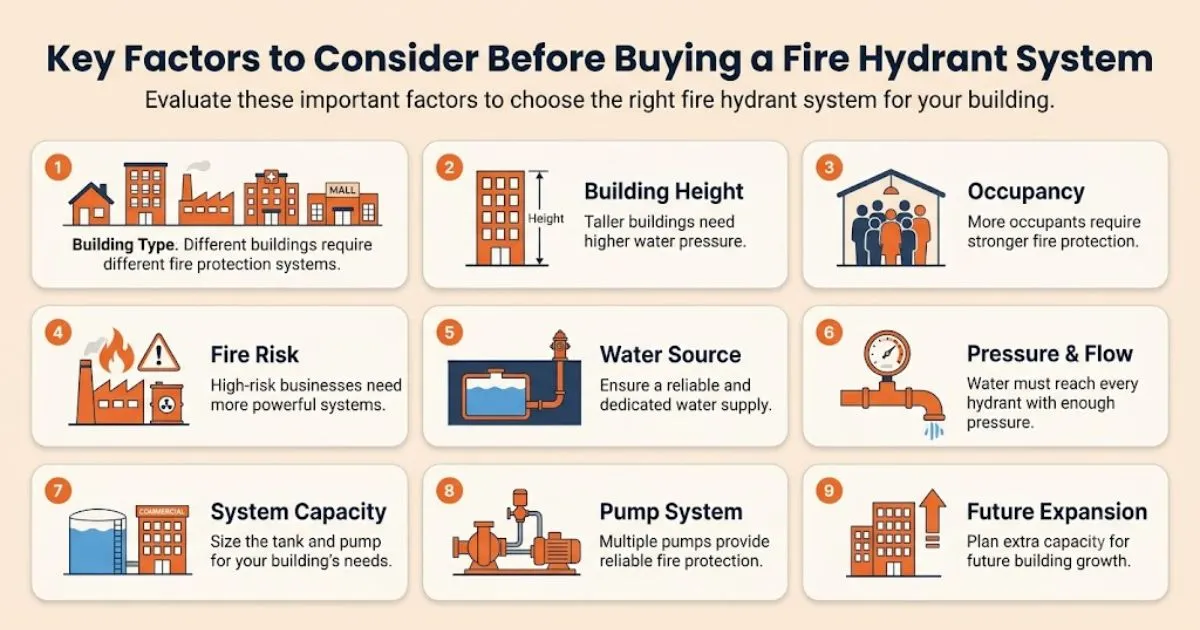
Before you talk to any supplier, think through these factors first. They will decide what kind of system, pump, and pipe size you actually need.
1. Type of Building
A home, an apartment complex, a hospital, a shopping mall, and a factory all have different fire risks. Commercial and industrial buildings usually need bigger pumps and more hydrant points than a private home.
2. Building Height
Taller buildings need stronger pumps to push water up to the higher floors. A four-floor building needs less water pressure than a fifteen-floor building. This is one of the first things a fire safety engineer will check.
3. Occupancy and Number of People
More people in a building means more risk and a greater need for a reliable system. A crowded shopping mall or a hostel full of students needs a stronger system than a lightly used warehouse.
4. Fire Risk of the Business or Activity
A furniture factory, a chemical store, or a garment factory has a much higher fire risk than a normal office. If your business handles flammable materials, you will need a system designed for higher fire loads.
5. Water Source
Where will your system get water from? Options include an underground tank, an overhead tank, a nearby river, or a municipal water line. In many parts of Nepal, water supply is not constant, so most buildings rely on a dedicated fire water storage tank.
6. Water Pressure and Flow
Your system must deliver enough pressure and flow rate to reach every corner of the building, including the top floor. This depends on pipe size, pump strength, and the height of the building.
7. System Capacity
Capacity means how much water your tank and pump can supply, and for how long. A small building may need a smaller tank, while a large commercial complex needs a bigger reserve to keep the system running during a long fire-fighting effort.
8. Pump Requirements
Most fire hydrant systems need more than one pump working together, not just a single machine. A typical setup includes a main fire pump to push water at high pressure, a jockey pump to maintain pressure in the pipes at all times, and a diesel pump as backup in case of a power cut.
9. Future Expansion
If you plan to add more floors or extend the building later, it is smart to design the system with some extra capacity now. This saves you from redoing the whole system later, which is expensive and disruptive.
Main Components You Should Evaluate
A fire hydrant system is not just one machine. It is a set of parts working together. Here is what to check for each one.
1. Fire Pump
This is the main pump that pushes water through the pipes during a fire. It should be strong enough to reach the highest and farthest point of your building with enough pressure.
2. Jockey Pump
A jockey pump is a small pump that keeps the pipeline pressurised when there is no fire. It switches on automatically to make up for small pressure drops, so the main fire pump does not turn on unnecessarily.
3. Diesel Pump
A diesel pump acts as a backup in case there is a power cut during a fire. This is very important in Nepal, where load-shedding or power failure can happen at the worst possible time. Never skip this backup, especially for larger buildings.
4. Hydrant Valves
These are the valves placed at different points in the building where a hose can be connected. They should be strong, corrosion-resistant, and easy to operate even by someone who is not a trained firefighter.
5. Hoses and Hose Reels
Hoses carry water from the hydrant valve to the fire. Hose reels are smaller, lighter, and easier for regular staff or residents to use for early-stage fires, before the fire grows too big.
6. Nozzles
The nozzle controls the shape and strength of the water spray. A good nozzle should let the user switch between a straight jet and a wider spray, depending on the situation.
7. Pipelines
Pipes carry water from the pump to every hydrant point. They must be sized correctly and made of good-quality material to handle pressure without leaking or bursting.
8. Water Storage Tank
This is where your system stores the water reserve for firefighting. The tank size should match your building's needs, and it should be checked regularly to make sure it stays full and clean.
Types of Fire Hydrant Systems
Different systems suit different buildings. Here is a basic comparison to help you understand the common options.
System Type | Best Suited For | Key Feature |
Wet Riser System | Mid-to-high rise buildings, apartments | Pipes are always filled with water, ready for instant use |
Dry Riser System | Buildings with low fire risk of freezing, storage buildings | Pipes are empty and filled with water only during a fire, often by the fire brigade |
Combined System | Large commercial buildings, malls, hospitals | Combines hydrant system with sprinklers for wider protection |
Standalone Hydrant System | Factories, warehouses, open industrial yards | Independent hydrant points spread across a large area |
Most homes and small apartments in Nepal use a wet riser system. Larger buildings, hospitals, and factories often need a combined system with sprinklers as an added layer of protection.
How Building Size and Purpose Affect
A small residential building with two or three floors usually needs a modest system: one or two hydrant points, a basic pump, and a small storage tank. The cost and complexity stay low.
A mid-sized apartment building or office, around four to ten floors, needs a stronger pump, multiple hydrant points on each floor, and a backup diesel pump. This is where proper planning becomes important, because water needs to reach the top floor with good pressure.
A factory, warehouse, or large commercial complex needs the most robust system. This includes multiple pumps, a large water reserve, several hydrant points spread across the property, and possibly a sprinkler system too. The type of goods stored also matters. Storing cotton, plastic, or chemicals increases fire risk and changes what your system needs.
Common Mistakes Buyers Make
Choosing the right fire hydrant system is not only about selecting the right equipment. Many buyers make small mistakes during planning, installation, or maintenance that can reduce the system's effectiveness. Understanding these common mistakes can help you make a better decision and ensure your building is better prepared in case of a fire.
Buying based on price alone: As mentioned earlier, cheap equipment often costs more in the long run through repairs and replacements.
Ignoring the building's actual needs: Some buyers copy a system used in another building without checking if it fits their own height, layout, or occupancy.
Skipping the diesel backup pump: This is risky in Nepal, where power cuts can happen anytime, including during a fire emergency.
Hiring unqualified installers: A poorly installed system may look fine but fail during an actual fire, when it matters the most.
Forgetting about maintenance: A fire hydrant system is not a one-time purchase. Pumps, valves, and pipes need regular checks to stay in working condition.
Not testing the system after installation: Some buyers skip full testing to save time, only to find out the system does not work properly when a real fire happens.
Practical Buying Tips to Avoid Bad Purchases
Many buyers make the mistake of choosing the cheapest system available. This can be a costly error later. Keep these tips in mind.
1. Focus on Quality, Not Price
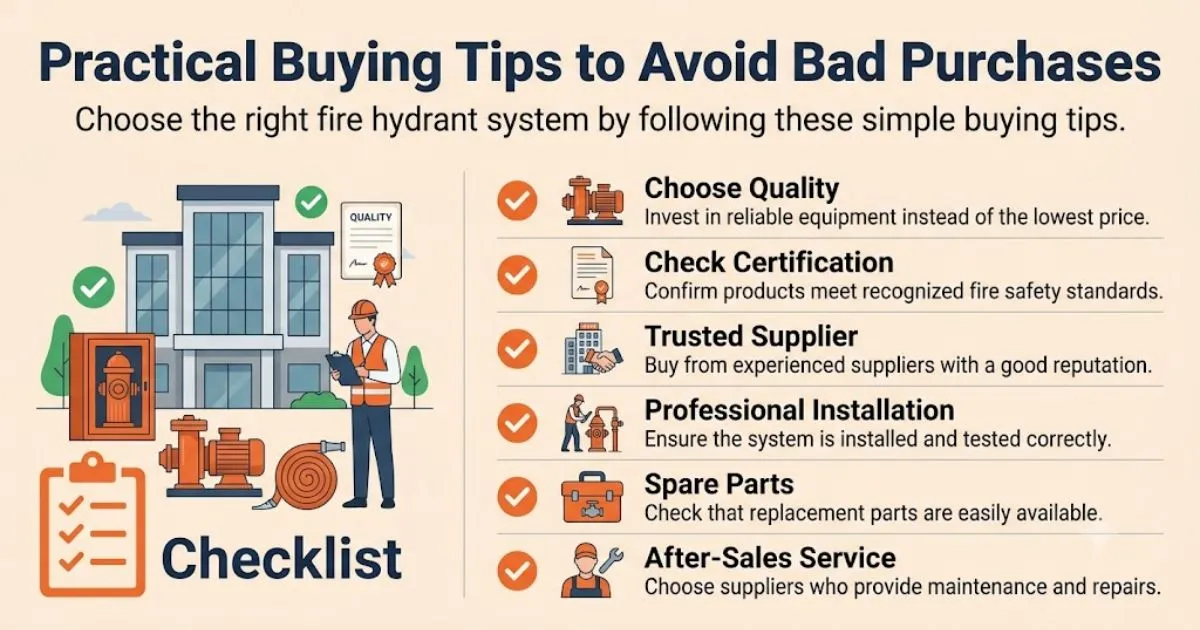
A very cheap pump or valve is often made of weak material that fails quickly, especially after repeated use. It may look the same as a good one in the shop, but it will not hold up during a real fire. Always compare build quality first, and treat price as the second consideration.
2. Check for Certification
Ask the supplier if the pumps, valves, and hoses meet recognized quality and safety standards. Reliable suppliers will happily show you certificates or test reports for their products. If a supplier avoids this question or cannot provide any proof, treat it as a warning sign.
3. Choose an Established Supplier
Choose a supplier with a good track record, proper documentation, and a physical office you can visit if something goes wrong. Ask other building owners or contractors for recommendations, and check how long the supplier has been in business. A supplier who disappears after the sale will not help you when you need a repair.
4. Insist on Professional Installation and Testing
Even the best equipment can fail if installed incorrectly, so always hire a qualified fire safety contractor rather than a general plumber or electrician. Once installed, the contractor should test the full system, checking water pressure, pump function, and every valve, before handing it over to you.
5. Check Spare Parts Availability
Ask if replacement parts are easily available in Nepal, or if you would need to import them and wait weeks during a repair. A system with hard-to-find spare parts can leave your building unprotected for a long time after a small breakdown.
6. Confirm After-Sales Service
Find out if the supplier offers regular maintenance visits, emergency repair support, and a clear warranty on their equipment. A good after-sales agreement means someone will actually show up when your system needs attention, not just when you are buying it.
Conclusion
Choosing a fire hydrant system is not just about buying equipment. It is about protecting the people and property inside your building. Take time to understand your building's needs, choose quality components, work with a trustworthy supplier, and make sure the system is installed and tested properly.
A well-chosen fire hydrant system may sit quietly for years without ever being used. But on the one day you need it, it can be the difference between a small fire and a major disaster.
Protect your property with a reliable fire hydrant system. Buy the best fire hydrant system in Nepal from Nicofire and get trusted fire safety solutions with expert support. Explore our fire safety products today and stay protected.
Frequently Asked Questions
A fire hydrant system is a fire safety system that supplies water during a fire to help control and stop it quickly, protecting lives and property.
In Nepal, dry barrel hydrants, wall-mounted hydrants, and standpipe systems are commonly used depending on building size, floor count, and water source.
The price of a fire hydrant system in Nepal varies by building size and components. A basic system for a small building can start around NPR 100,000 to 250,000, while larger systems with pumps and extensive piping may cost NPR 300,000 to 1,000,000+.
Yes, many commercial buildings, apartments, hospitals, and hotels are required to install fire hydrant systems to meet local fire safety rules and standards.
A fire hydrant system should be inspected visually every month and undergo flow testing at least once a year to make sure water pressure and flow meet safety needs.
Yes, in areas without regular municipal water supply, fire hydrant systems can use water tanks, underground reservoirs, or dry hydrants connected to ponds or wells as an alternative water source.
Comments
No comments yet.
Be the first to share your thoughts.