A small fire can start in seconds. A pan of hot oil catches fire. A candle falls on a curtain. A wire sparks near old papers. In these moments, you don't have time to think too much. You need to act fast and safely.
This is where a fire blanket becomes very useful. It is one of the simplest fire safety tools you can own, yet many people in Nepal don't know how to use one correctly.
In this guide, we will explain what a fire blanket is, when to use it, when not to use it, and the exact steps to use it safely. We will also cover common mistakes, storage tips, and how it works with other fire safety tools.
Table of Contents
What Is a Fire Blanket?
A fire blanket is a sheet of fire-resistant material. It is usually made of woven fiberglass or a similar cloth that does not burn easily.
You use it by covering a small fire with it. The blanket blocks the oxygen supply to the fire. Since fire needs oxygen to burn, the flame dies down quickly once it is covered.
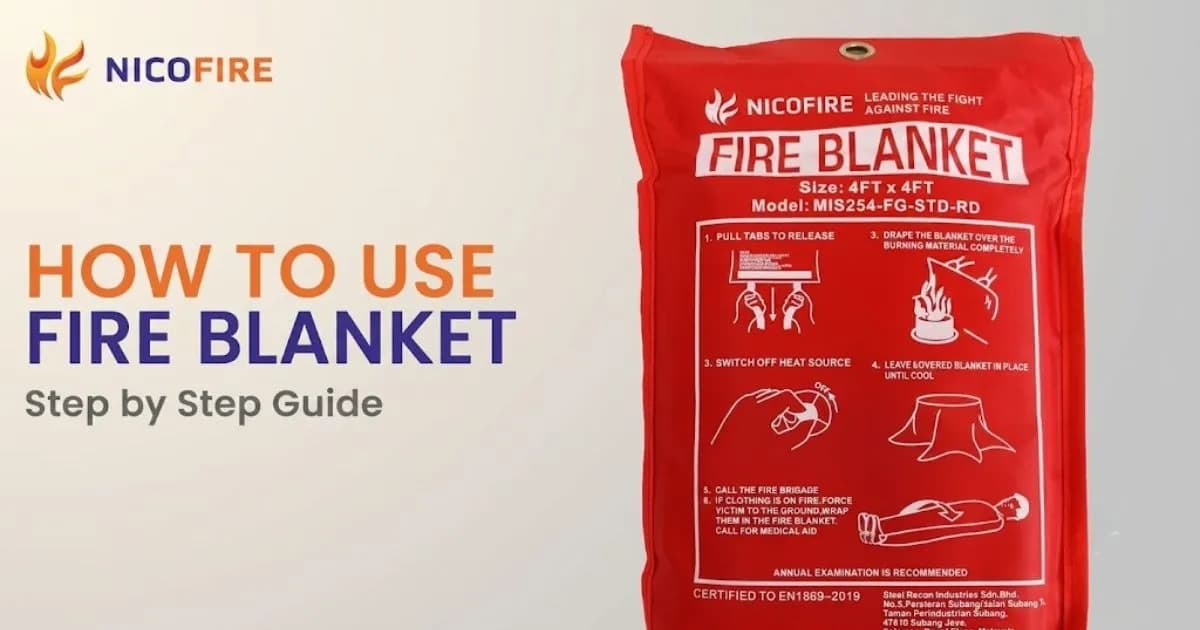
Fire blankets are folded inside a small case or pouch. This case is usually mounted on a wall, near the kitchen, in offices, or in labs. When you pull the tabs, the blanket comes out and you can use it right away.
Unlike a fire extinguisher, a fire blanket does not spray any chemical or foam. It works purely by smothering the fire, which means cutting off its air supply. This makes it a good option for small fires, especially in the kitchen.
When Should You Use a Fire Blanket?
A fire blanket works best on small, contained fires. Here are common situations where it is the right tool:
Cooking oil or pan fires: A pot or pan catches fire on the stove. This is one of the most common home fires in Nepali kitchens, especially when frying food.
Clothing fires: If a person's clothes catch fire, wrapping them in a fire blanket can put out the flames and protect their skin.
Small electrical fires: A fire blanket can be used on small fires from wires or small appliances, as long as the fire is small and the blanket does not touch any live wire directly for too long.
Small fires in bins, paper, or fabric: A fire that starts in a waste bin or on a small piece of cloth can often be smothered quickly with a blanket.
The key word here is small. A fire blanket is designed for fires that are still in the early stage. If the fire has already grown large or is spreading fast, a fire blanket will not be enough.
When You Should Not Use a Fire Blanket
Knowing when not to use a fire blanket is just as important as knowing how to use it. Using it in the wrong situation can put you in danger.
Do not use a fire blanket in these cases:
Large fires: If the fire is bigger than the blanket itself, it cannot cover it fully. This means it will not cut off the oxygen, and the fire will keep burning.
Fires that are spreading: If flames are already moving to nearby items, walls, or furniture, leave the area and call for help instead.
Deep fat fryers with a lot of oil: A large amount of burning oil produces a lot of heat. A blanket may not be strong enough to smother it completely.
Gas leaks or gas fires: If you smell gas or see a fire connected to a gas leak, do not try to cover it. Turn off the gas supply only if it is safe to reach, and leave the area immediately.
Fires you are not confident about handling: If you feel unsure, scared, or the smoke is making it hard to breathe, do not attempt to use the blanket. Your safety always comes first.
In all of the above cases, the better option is to evacuate the area, call the fire department, and let trained professionals handle it. In Nepal, you can call the fire brigade helpline at 101 in most areas.
Fire Blanket vs Fire Extinguisher: Which One to Use?
Many people get confused about when to use a fire blanket and when to use an extinguisher. Here is a simple comparison to help you decide.
Situation | Fire Blanket | Fire Extinguisher |
Small pan or oil fire | Best choice | Can also work, but may splash hot oil |
Person's clothing on fire | Best choice | Not recommended near a person's body |
Small electrical fire | Can be used carefully | Use a CO2 or dry powder extinguisher |
Large or spreading fire | Not enough | May help, but call fire service too |
Fire in an open, wide space | Less effective | More effective |
If you are ever unsure which one to use, remember this: a fire blanket is for smothering small, close fires. An extinguisher is better for slightly bigger fires or when you need to spray from a distance.
Step-by-Step Guide: How to Use a Fire Blanket Safely
Now let's go through the exact steps. Read this carefully, and if possible, practice the folding and holding motion once with an unused blanket so your hands remember what to do.
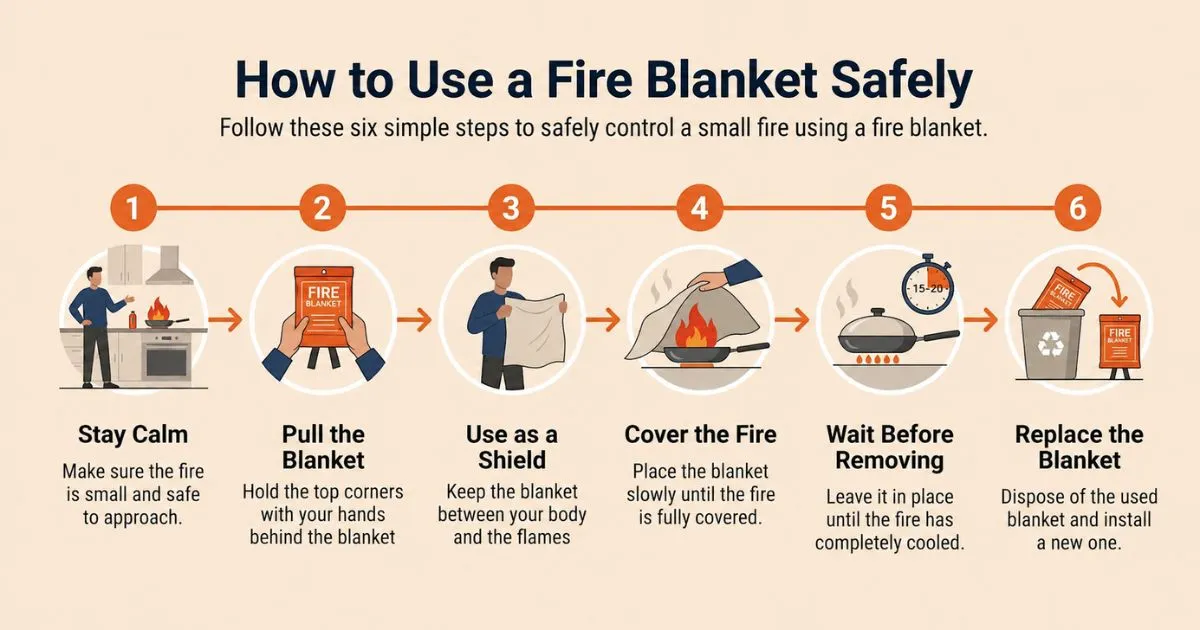
Step 1: Stay Calm and Assess the Fire
Take one second to check the size of the fire. If it is small and contained, like a pan on the stove, you can proceed. If it is already spreading, skip the blanket and get everyone out instead. If it's a cooking fire, turn off the gas or stove knob if you can reach it safely, but never try to move a burning pan.
Step 2: Pull the Blanket Out and Hold It Correctly
Fire blanket cases have two tabs hanging down. Pull both firmly to release the blanket. Hold the top two corners with your fingers and thumbs folded under the edge, so your hands stay protected behind the blanket, not in front of it.
Step 3: Approach the Fire Using the Blanket as a Shield
Hold the blanket up in front of your body like a shield, with arms slightly bent. This protects your face and hands from heat as you walk toward the fire.
Step 4: Place the Blanket Over the Fire Gently
Lay the blanket over the fire slowly, starting from the side closest to you and moving it forward. Do not throw it from a distance, as this pushes air onto the fire and can leave gaps for oxygen to get in. Make sure it fully covers the fire, including all edges.
Step 5: Check Before Removing Blanket
Do not remove the blanket right away. Leave it covering the fire for at least 15 to 20 minutes so the area cools down and the fire does not restart. Before removing it, make sure there is no more heat or smoke coming from underneath. If unsure, wait longer.
Step 6: Dispose of the Blanket Safely
Once used, a fire blanket cannot be reused, even if it looks fine. Let it cool completely, then dispose of it and replace it with a new one.
If a Person's Clothing Is on Fire: Special Steps
Using a fire blanket on a person is a bit different from using it on a pan or object. Follow these steps carefully:
Tell the person to stop moving. Running makes the fire burn faster because it gets more air.
Help them drop to the ground if possible.
Wrap the fire blanket around them, covering the flames completely, starting from the neck downward.
Keep the blanket in place and gently pat down to smother the flames. Do not rub, as this can cause more injury to the skin.
Keep the person still and covered until the fire is fully out.
Call for medical help immediately, even if the burn looks small. Burns can be more serious than they appear on the surface.
Common Mistakes People Make With Fire Blankets
Even a basic fire safety tool like a fire blanket can be used wrongly if you are in a panic. Here are mistakes to avoid:
Throwing the blanket from far away. This creates air movement that can make the fire bigger instead of smothering it.
Not covering the fire completely. Leaving any gap allows oxygen to reach the flame again.
Removing the blanket too early. The fire can restart if it is still hot underneath.
Trying to move a burning pan. This is one of the most dangerous mistakes and can cause the fire to spread across the kitchen.
Using a fire blanket on a large fire. If the blanket cannot fully cover the flames, it will not work, and you may put yourself at risk.
Not knowing where the fire blanket is kept. In an emergency, every second counts. If your family or staff don't know where it is, it becomes useless.
Using water on an oil fire instead of a blanket. Water and hot oil should never mix. It can cause the fire to explode outward. Always use a blanket or a proper extinguisher on oil fires.
Where to Keep Fire Blankets in Nepal
Placement matters. A fire blanket only helps if it is easy to reach when needed.
In homes: Keep it near the kitchen, but not directly above the stove. A wall near the kitchen entrance is a good spot, so you can grab it without reaching over the fire.
In restaurants and hotels: Place blankets near cooking stations, especially where deep frying happens. Staff should be trained on where it is and how to use it.
In offices: Keep one in the pantry or small kitchen area, and another near electrical panel rooms if possible.
In schools: Place fire blankets in science labs, near the school kitchen, and in the staff room. Make sure teachers know how to use them, since children may not be able to use them safely on their own.
In laboratories: Fire blankets are especially important here because of chemical experiments. Keep them near workstations and make sure they are easily visible.
In commercial buildings and factories: Place them near areas with higher fire risk, such as near machinery, storage rooms, or electrical rooms.
A basic rule to follow: the blanket should be close enough to reach in 3 to 5 seconds, but not so close that you would have to reach through fire or smoke to get it.
Inspection, Maintenance, and Replacement
A fire blanket does not need much maintenance, but a few checks keep it ready for use.
Check the case regularly. Make sure the case is not damaged, and the tabs are not stuck or broken.
Inspect the blanket every few months. Open it out fully once or twice a year to check for holes, tears, or discoloration. Fold it back the same way after checking.
Check the expiry or manufacture date. Most fire blankets last around 5 to 10 years, depending on the brand and material. Check the label for the recommended replacement period.
Replace after any use. Even if the blanket looks fine after putting out a fire, it should not be reused. The fibers may be weakened by the heat.
Keep it dry. Moisture can damage the fabric over time. Avoid placing it in areas with high humidity or water exposure, like directly above a sink.
How Fire Blankets Work With Other Fire Safety Tools
A fire blanket is only one part of a good fire safety system. It works best when used alongside other fire safety equipment, such as smoke detectors, fire extinguishers, and emergency exits. Each tool has a different purpose, and together they provide better protection during a fire emergency.
Smoke Detectors
Smoke detectors alert you as soon as smoke is detected, often before the fire becomes serious. This early warning gives you more time to use a fire blanket safely or leave the building if necessary.
Fire Extinguishers
Fire extinguishers are designed to tackle larger or different types of fires that a fire blanket may not be able to handle. Keeping both nearby gives you the right option depending on the type and size of the fire.
Fire Exits and Evacuation Plans
If the fire cannot be controlled safely, evacuating the building should always be your priority. Knowing where the nearest exit is and following an evacuation plan can help everyone leave safely.
When these fire safety tools are used together, they provide stronger protection than using any one of them alone. A fire blanket is ideal for dealing with small fires, while the other tools help you respond safely as the situation changes.
Conclusion
A fire blanket is small and easy to use, but it can make a big difference during an emergency. Knowing the correct steps, keeping it in a reachable place, and checking it regularly can help you protect your home, family, and workplace.
Take a few minutes today to check if your home or office has a fire blanket. If not, consider getting one and placing it somewhere everyone can find quickly. A little preparation now can save a lot of trouble later.
Frequently Asked Questions
A fire blanket is a safety tool made of heat-resistant material like fiberglass. It works by covering a small fire completely, cutting off the air supply so the flames go out safely.
Fire blankets should be placed in easily accessible spots near high-risk areas like kitchens, near stoves, electrical equipment, workshops, or exits, but not directly over a fire source.
No. Fire blankets are best for small fires such as kitchen oil fires, gas stove fires, electrical fires, or when a person’s clothes catch fire. They should not be used on large fires, chemical fires, or spreading fuel fires.
Use it step by step: check the fire size, pull the blanket from its pouch, protect your hands and body, carefully cover the fire completely, and leave it in place for 20–30 minutes to cool. Never reuse a used blanket.
Small blankets are suitable for kitchens and single appliances, medium ones are ideal for homes and small offices, and large blankets are better for restaurants, hotels, or workshops where fire risks are higher.
Yes. Regularly check the pouch for damage, ensure instructions are visible, and replace the blanket if it has been used or shows wear. Keeping it in good condition ensures it works when needed.
Comments
No comments yet.
Be the first to share your thoughts.